
The global solar photovoltaic market, which has experienced robust growth, is expected to continue to grow rapidly over the next five years. The U.S. now has over 7,700 MW of installed solar electric capacity, enough to power more than 1.2 million American households.
Solar PVs are used to power anything from small electronics such as calculators, cell phones, road signs up to mobile generators, homes and large commercial businesses. Current research indicates that the growing interest of nations in developing clean energy is expected to drive more and more solar installations across the globe.
The solar photovoltaic effect was observed as early as 1839 by Alexandre Edmund Becquerel, and was the subject of scientific inquiry through the early twentieth century. In 1954, Bell Labs in the U.S. introduced the first solar PV device that produced a useable amount of electricity, and by 1958, solar cells were being used in a variety of small-scale scientific and commercial applications.
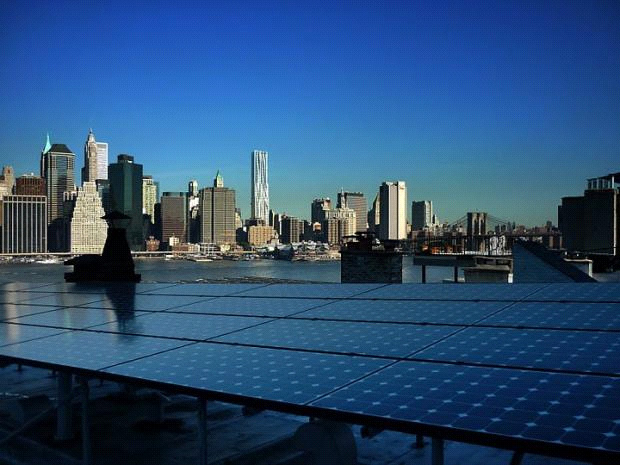
The energy crisis of the 1970s saw the beginning of major interest in using solar cells to produce electricity in homes and businesses, but prohibitive prices made large-scale applications impractical.
Industry developments and research in the following years made PV devices more feasible and a cycle of increasing production and decreasing costs began.
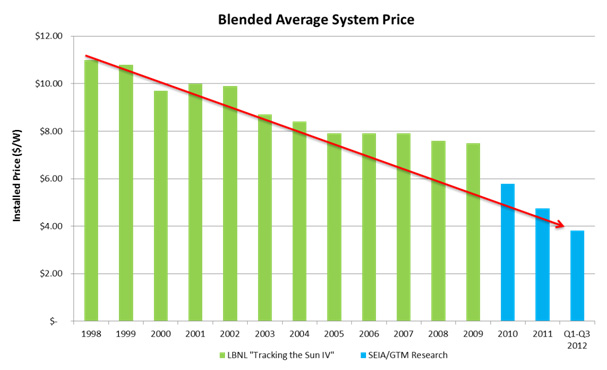
Today, solar PV costs have dropped dramatically as the industry has scaled up manufacturing and incrementally improved the technology with new materials. Installation costs have come down too with more experienced and trained installers. However, the U.S. still remains behind other nations that have stronger national policies to shift energy use from fossil fuels to solar. Globally, the U.S. is the fourth largest market for PV installations behind world leaders Germany, Japan and Spain.
In the United States, the solar Investment Tax Credit (ITC) has been one of the most important federal policy mechanisms to support the deployment of solar energy. The ITC has provided business certainty to project developers and investors and continues to drive growth in the industry and job creation across the country.
U.S. Solar Industry ITC Facts
The ITC is a 30 percent tax credit for qualified renewable energy property.
The multiple-year extension of the solar ITC has helped the solar market grow in the U.S. by over 3,000 percent since the ITC was implemented in 2006.

The success of the ITC shows that a stable, long-term incentive can reduce prices and create jobs in solar energy. The ITC has fueled dramatic growth in solar installations and has increased U.S. solar manufacturing capacity. Today, over 625 manufacturing facilities produce solar components across 48 states. The existence of the ITC through 2016 provides market certainty for companies to develop long-term investments that drive competition and technological innovation, which in turn, lowers costs for consumers.
The most recent U.S. solar industry facts and statistics are available through the Solar Energy Industries Association (SEIA) at seia.org.
Invictus Energy Solutions (IES) is a clean and renewable energy company which promotes the development of clean and sustainable energy. IES encourages viable renewable energy projects to power a cleaner, stronger and greener America.
Advocate for the expansion of clean and renewable energy in the U.S. and get involved. Connect with Invictus Energy Solutions on Facebook and Twitter.